Articles ·
When the Stones Cry Out: What Dinesh D'Souza Says Archaeology Reveals About the Bible
A recent Harvest.org interview highlights finds, from a priest's bone box to ancient pools, that D'Souza says bring Scripture's people and places to life.
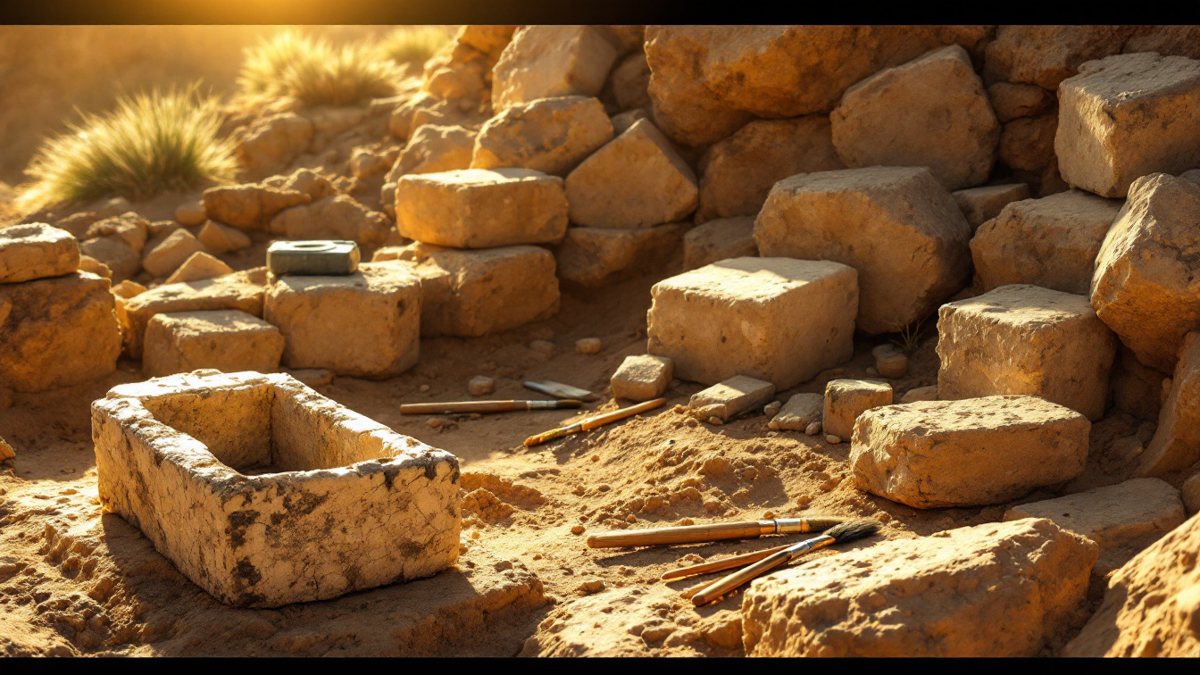
Does archaeology prove the Bible is true? That is the question Harvest.org takes up in a recent piece on The Greg Laurie Show, featuring author Dinesh D'Souza and his new book, The Stones Cry Out. This is our reflection on what that conversation says.
A three-year journey that began in Israel
According to Harvest.org, D'Souza had written on Christian apologetics before, but he was not exposed to biblical archaeology until his first trip to Israel at the end of 2022. He was charmed to be in the land of the Bible, in places he had dreamed about since childhood.
Seeing artifacts that had come out of the ground, he says, he turned to his wife and asked why this information isn't shouted from the rooftops of every synagogue and church. He then spent three years learning the field. Harvest.org reports that he describes biblical archaeology as about 150 years old, with hundreds of discoveries related to the Bible. He also says that in that time there is "not a single important finding" that contradicts it.
Small seals, real people
D'Souza notes that archaeology is often slow and painstaking, and the finds aren't always grand. Sometimes what comes out of the ground is a tiny, half-inch clay seal once used to close correspondence. The letter is gone, but the hardened clay remains with a name on it.
He gives the example of Jehucal, son of Shelemiah. According to the interview, this man is mentioned briefly in Scripture, yet a clay seal lets him step into the pages of history. A minor figure in a couple of lines becomes a real person we can point to.
The bone box of Caiaphas
The most striking example in the piece is Caiaphas, the high priest in the trial of Yeshua (Jesus). D'Souza says the Bible gives only one name, while the Jewish historian Josephus gives his full name as Joseph Caiaphas.
As D'Souza tells it, archaeologists digging in the priestly quarter of Jerusalem found about 20 ossuaries, the stone boxes used in the first century to hold a person's bones after the body had decayed. One was especially ornate and bore the inscription Yehosef bar Qayafa, "Joseph, son of Caiaphas." Inside were the bones of a man about 60 years old, dated to the first century AD.
D'Souza says this is more than a name on a stone. You are looking at the bones of a man from the Gospel story. He calls that a "chilling" feeling, an encouragement to believers and a puzzle for skeptics.
“I tell you,” He answered, “if they remain silent, the very stones will cry out.”
Luke 19:40 (BSB)
Pools, pilgrims, and the road to the Temple
The interview also turns to two pools in Jerusalem, Bethesda and Siloam, both linked to miracles of Yeshua. D'Souza says historians once assumed such pools were small ritual baths. The Pool of Siloam, he says, turned out to be about the size of an Olympic swimming pool.
He explains that out-of-town Jews, Yeshua included, came to Jerusalem for the holy days. They would bathe in the pool and then walk the pilgrimage road, about 500 meters, to the Temple. For a Jewish reader, that picture is worth pausing over: a Galilean Jew, going up to Jerusalem for the feast, following the same rhythm of worship his people always have.
Harvest.org also reports that D'Souza says archaeologists recently confirmed the location of biblical Bethsaida, another place where Jesus did miracles. On the crucifixion site, he argues that the Church of the Holy Sepulchre is the most likely location, partly because later archaeological work indicates it would have been outside Jerusalem's walls in Yeshua's day, as Scripture describes.
The Dead Sea Scrolls and the Hebrew Bible
D'Souza calls the Dead Sea Scrolls the greatest biblical discovery of the 20th century. According to the interview, the oldest Hebrew Bible known before them dated to about 1000 AD, so skeptics wondered whether scribes had changed the text. The scrolls, dated from roughly the third century BC to the first century BC or AD, confirmed, he says, that the Hebrew Bible had not been altered in any meaningful way.
He adds that the scrolls were found in 1947, one year before the founding of the state of Israel. In his words, the Jewish people's ancient "charter," their Hebrew Bible, was validated just before they became a nation again.
The grass withers and the flowers fall, but the word of our God stands forever.”
Isaiah 40:8 (BSB)
A word of perspective
Archaeology can confirm names, places, and customs. It can make the Bible's world vivid and its people tangible. Our confidence rests on more than shards and stones, though. It rests on the God who spoke through the Prophets and who, we believe, sent Yeshua as Messiah.
Still, it is a gift when the ground itself seems to testify. If you are a Jewish seeker, you might read the accounts of Caiaphas, the pools, and the pilgrim road with fresh eyes, and then open the Scriptures to meet the One at the center of them.
Reporting this draws on: Harvest.org
Scripture: Berean Standard Bible (BSB), public domain. Written by JewTok.com.