Articles ·
Ten Finds from the Ground That Echo the Hebrew Scriptures
Aish.com highlights ten excavated objects that name biblical kings, places and events, and they invite a closer look at the Book we already trust.
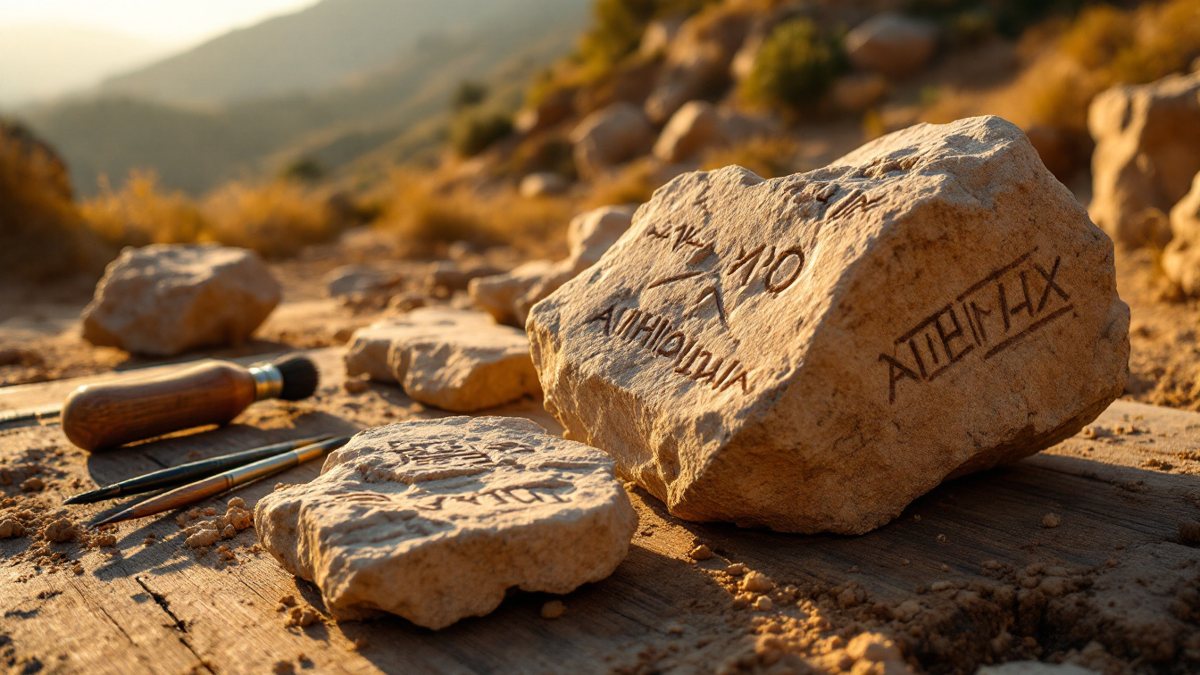
A king's enemies boasted about the "House of David." A pharaoh bragged about defeating Israel. According to Aish.com, these are among ten of the most compelling archaeological finds tied to the Bible. The article stresses that they are not legends or interpretations. They are excavated inscriptions, tablets, monuments and scrolls that name biblical figures, places and events.
Aish.com spoke with Rabbi Barnea Levi Selavan, a licensed educator and tour guide who is also a PhD candidate in archaeology at Tel Aviv University. Here are some highlights from the piece, with a few thoughts of our own.
A king, a dynasty, and a blessing
According to Aish.com, the Tel Dan Stele surfaced in 1993. It is an Aramean king's own victory boast, and it names the king of Israel and the king of the "House of David." Aish.com calls it the first extrabiblical mention of David, written by a hostile neighbor. Some scholars had once dismissed David as a legend.
The article also describes two tiny silver scrolls found by Gabriel Barkay in 1979 in a burial chamber outside ancient Jerusalem. They contain the Priestly Blessing, and Aish.com says they are over 400 years older than the Dead Sea Scrolls, making them the oldest surviving biblical text ever found. Rabbi Selavan notes that parents bless their children with these words on Shabbat, so those words were already being written down 2,600 years ago.
‘May the LORD bless you and keep you; may the LORD cause His face to shine upon you and be gracious to you; may the LORD lift up His countenance toward you and give you peace.’
Numbers 6:24-26 (BSB)
Kings, empires and a ledger
Aish.com says Pharaoh Merneptah's stele includes the line "Israel is laid waste, its seed is no more," the earliest certain mention of Israel outside the Bible, dated to 1208 BCE. Sennacherib's prisms name "Hezekiah the Judahite" and list 46 Judean cities captured. According to the article, they never claim he took Jerusalem, which matches 2 Kings 19.
The article also points to an Assyrian monument showing "Iaua son of Omri," identified as King Jehu of Israel, bowing with tribute. Aish.com calls it the only surviving image of any king of Israel or Judah ever found. The Mesha Stone names places like Dibon, Medeba and Nebo, and "the men of Gad."
In Babylon, administrative tablets list oil for "Yaukin, king of the land of Judah" and his five sons. Aish.com notes this fits the closing paragraph of Kings, where the exiled king is lifted from prison. In 2007, a temple receipt from 595 BCE was found to name Nebo-Sarsekim, an official mentioned in Jeremiah 39:3. And at Tell Deir Alla, wall plaster from 1967 describes "Balaam son of Beor, a seer of the gods."
The scroll that spans the centuries
The list ends with the Great Isaiah Scroll, found in 1947 and dated by Aish.com to around 125 BCE. It holds all 66 chapters and is remarkably close to the text used today. According to the article, most differences are spelling and grammar. It is about a thousand years older than the oldest previously known complete Hebrew copies.
Rabbi Selavan calls it a study copy, so some variants are no surprise. "And yet," he says, "the degree to which it still conforms to the Masoretic text is striking."
What it means for a seeker
Aish.com is careful to say that for those who received the Torah from generation to generation, faith has never depended on archaeology. We agree. God's Word does not need a shovel to be true. Still, Rabbi Selavan's closing thought is a kind one. He says the finds surfacing in our generation are "a gift," and for people who feel distant, "a chance to see that the conversation is real and that the evidence for it is in the ground."
For us, the Tel Dan Stele carries a special note. Aish.com reminds us that Jewish tradition awaits Mashiach, a descendant of David. Followers of Yeshua believe that promise has a name. The Gospel opens by introducing Yeshua as the son of David, in the line of the very dynasty those ancient neighbors could not ignore.
This is the record of the genealogy of Jesus Christ, the son of David, the son of Abraham:
Matthew 1:1 (BSB)
If you have felt far from the story of Israel, these stones and scrolls are a gentle invitation to come closer. Read the Hebrew Scriptures with fresh eyes, ask your questions openly, and see where the conversation leads.
Aish.com also mentions ModernTribe.org, a new site cataloging more than 100 archaeological finds tied to the people, places and events of Tanach. It is a good place to keep exploring. This article is our own commentary on the Aish.com piece, and the original is worth reading in full.
Reporting this draws on: Aish.com
Scripture: Berean Standard Bible (BSB), public domain. Written by JewTok.com.