Articles ·
A Clay Seal from the Temple Mount and a Name from the Days of King Josiah
According to JNS.org, a seal impression found in discarded Temple Mount soil may point to the son of an adviser named in 2 Kings, though researchers say the link is a possibility, not a proven fact.
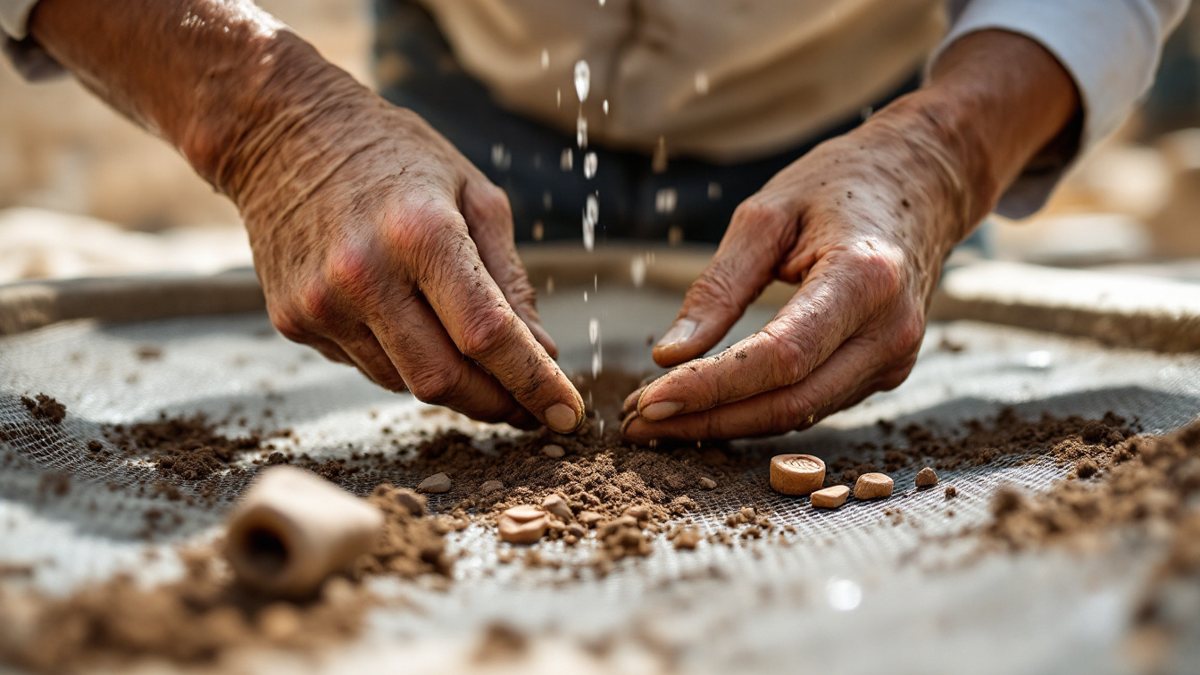
A small piece of clay from the First Temple period is drawing attention in Jerusalem. According to JNS.org, a seal impression recovered by the Temple Mount Sifting Project bears the name "Yeda'yah (son of) Asayahu."
Researchers have tentatively linked the father's name to Asaiah, an adviser to King Josiah mentioned in 2 Kings and 2 Chronicles. JNS.org is careful to say this remains a possibility, not an established match. We should be just as careful.
What the researchers are saying
JNS.org reports that project co-founder and director Zachi Dvira expects a study of the seal impression to appear in the Israel Exploration Journal by the end of 2026. He said the team has just received the peer review correction it has to make.
The impression was found in 2025. It is one of approximately 35 First Temple-period seal impressions the project has recovered.
Dvira argues that the uncommon name, the Temple Mount origin of the soil, and the setting of the biblical account strengthen the possibility. "We think [there are] good chances that this is the same person," he told JNS. He also clarified that the seal belonged to the man's son, not to Asaiah himself.
JNS.org adds a fair note of caution. A matching name and a plausible setting do not establish identity. The coming publication will let other scholars weigh the argument.
How a seal worked
Seal impressions secured documents, packages and containers. An official pressed a seal into clay attached to a closure. Opening the contents would break or disturb the clay, leaving evidence of unauthorized access.
According to JNS.org, researchers also study the back of these objects. Fabric impressions can indicate what the clay once secured. Dvira said the project has a comparatively high proportion of sealings with such impressions. Alongside evidence from other ancient Near Eastern temples and palaces, he said, this suggests a connection to treasury administration.
Rescued from discarded earth
The project grew out of Waqf construction work in 1999 associated with the entrance to the Al-Marwani Mosque, also known as Solomon's Stables. JNS.org says large amounts of earth were removed from the Temple Mount without the archaeological oversight needed to record their layers. Some of it was dumped in the Kidron Valley.
Dvira, then an archaeology student, gathered friends and fellow students to examine the material. With his professor, archaeologist Gabriel Barkay, he obtained a permit and began the sifting project in 2004. According to JNS.org, Barkay died in January 2026.
There is a real limitation here. JNS.org notes that recovering an object does not restore the layer it came from, so researchers compare finds with securely dated artifacts elsewhere and look for patterns across the collection.
Decades of work still ahead
The report also describes a stone seal that researchers suspect may be associated with Alexander Jannaeus, the Hasmonean ruler and high priest. It was first thought to belong to the First Temple period but was reassessed during laboratory research as a Second Temple-period object. According to the report, the identification is preliminary and the project has not published its findings. "We're still studying this," Dvira said.
The project's annual operating budget is approximately 1.8 million shekels, according to JNS.org. Dvira estimates the remaining soil needs another three to four years of sifting. With a proper budget, he said, the final publication could be finished within five years. At the current pace, he estimates it would take 25 years.
Why this matters to us
For Jewish seekers, stories like this can be moving. Names from Scripture are not myths floating in the air. They belong to a real city, real officials and real history. We hold that the Bible is true whether or not any one seal can be matched to a person in it.
Second Kings tells of a time in Josiah's reign when the Book of the Law was found in the house of the LORD.
Then Hilkiah the high priest said to Shaphan the scribe, “I have found the Book of the Law in the house of the LORD!” And he gave it to Shaphan, who read it.
2 Kings 22:8 (BSB)
Even then, God's Word was recovered and brought back into the light. Archaeology cannot prove everything, and it does not need to carry the weight of our faith. Still, it can quietly show how closely the Scriptures are tied to real places and people.
The grass withers and the flowers fall, but the word of our God stands forever.”
Isaiah 40:8 (BSB)
We will wait for the peer-reviewed publication before saying more about this seal. In the meantime, it is encouraging to see careful scholars handling a fragile piece of the past with patience and honesty. May the One who gave us the Word and sent Yeshua the Messiah be honored in every search for truth.
Reporting this draws on: JNS.org
Scripture: Berean Standard Bible (BSB), public domain. Written by JewTok.com.