Articles ·
A 2,000-Year-Old Water Road Under Jerusalem: What the Lower Aqueduct Reminds Us
Archaeologists have uncovered a 300-meter stretch of Jerusalem's ancient Lower Aqueduct, and it points to something deeper than engineering.
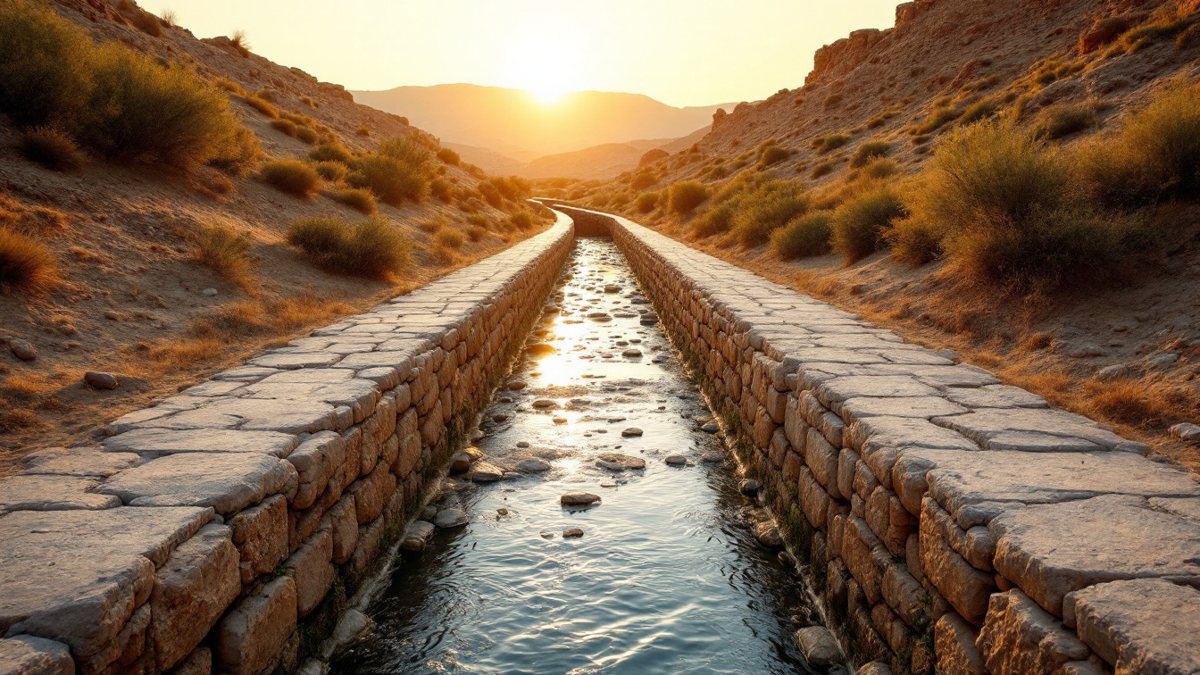
Water is easy to ignore until you don't have any. This week's archaeology news from Jerusalem is a good reminder of that. According to Washington Jewish Week, Israeli archaeologists have uncovered a 300-meter (984-foot) section of the city's ancient Lower Aqueduct.
What was found
The Israel Antiquities Authority began the dig three months ago, ahead of the planned construction of a new neighborhood at the city's edge. Washington Jewish Week explains that such "salvage excavations" are common before major building projects in Israel. They make sure any ruins can be mapped and protected, even if they aren't fully excavated at the time.
The report says the aqueduct is believed to date to the Hasmonean period, in the second and first centuries B.C.E. It carried spring water from the Gush Etzion region, through Solomon's Pools south of Bethlehem, to Jerusalem and the Temple Mount. It stayed in intermittent use until the early 20th century.
Parts of the aqueduct have been found before. But IAA archaeologist Benyamin Storchan said this is the first time such a large section will be made permanently accessible to the public. It will become a promenade and archaeological park at the entrance to the future neighborhood.
A city that needed more water
According to the article, Jerusalem originally depended on the Gihon Spring and rainfall runoff. As the population grew under Hasmonean rule, so did the need for water. That was especially true at Jewish festival times, when pilgrims doubled or even tripled the number of people in the city.
The answer was to bring water from springs more than 800 meters above sea level. Two major aqueducts, the Lower and the Upper, then carried it more than 20 kilometers (12 miles) toward Jerusalem. The report says the Lower Aqueduct appears to be the older of the two.
The water flowed by gravity alone, with no mechanical pumps. Along most of the route it dropped just one meter in elevation per kilometer. Amit Re'em, the IAA's Jerusalem district archaeologist, called it "an engineering marvel."
Repaired, not replaced
The detail that stood out to me is how long the aqueduct lasted. The report says it was repaired and reused through the Roman, Byzantine, Umayyad, Crusader, Mamluk and Ottoman periods. The IAA says the new section shows several stages of its history. It began as a built, plastered channel. About 500 years ago, in the Ottoman period, ceramic pipes were placed inside it.
Storchan called this reuse "one of the most fascinating parts." In his words, "here we see a single installation being reused again and again for its original function."
The repairs also make dating harder, since later plaster and changes can hide the original construction. So the team is working with specialists and newer methods, including optically stimulated luminescence, to narrow down the dates. As Storchan put it, an archaeologist's job "is to fill in another piece of the puzzle."
Living water
Reading this, I thought about how often Scripture uses water to describe what God gives. Isaiah speaks of joy in drawing from the wells of salvation.
With joy you will draw water from the springs of salvation,
Isaiah 12:3 (BSB)
The article tells us that pilgrims filled Jerusalem at the festivals, and that planners worked hard to make sure they had water. The Gospel of John records that at a great feast, Yeshua stood and made an invitation to everyone who was thirsty.
On the last and greatest day of the feast, Jesus stood up and called out in a loud voice, “If anyone is thirsty, let him come to Me and drink.
John 7:37 (BSB)
The people who built and repaired this channel knew that a city cannot live without a dependable source. Over the centuries, rulers kept mending it because they needed it. The Messiah's offer meets a deeper need, and it is a source that never runs dry or needs repair.
A quiet stretch of plastered stone, once hidden at the edge of Jerusalem, is now being preserved for visitors to walk beside. It is a good place to remember how much care went into giving a city water, and to ask where we ourselves go to drink.
Reporting this draws on: Washington Jewish Week
Scripture: Berean Standard Bible (BSB), public domain. Written by JewTok.com.